

Would You Run?
The Stoic Test of Character

Dear Classical Wisdom Reader,
A young family sits at a restaurant overlooking a luxury ski resort in the French Alps. As they admire the dramatic mountain vista, an avalanche begins to descend down the slope. There had been many controlled avalanches during their stay, so at first no one is particularly concerned.
But then the white cloud grows larger...
The wife turns to her husband, Tomas, and asks if they should leave. He assures her it is controlled and that they are perfectly safe. Yet within moments the avalanche reaches the balcony and begins to engulf the restaurant.
Panic erupts, as the patrons scream and people scramble for the exits.
And among them, Tomas runs.
He leaps from his chair, pushes someone aside, and flees, leaving behind his wife and two young children in stunned disbelief.
Fortunately, it was only a cloud of snow... and the family is physically unharmed.
Except for one small detail.
In a matter of seconds, they have just discovered who their husband and father really is.
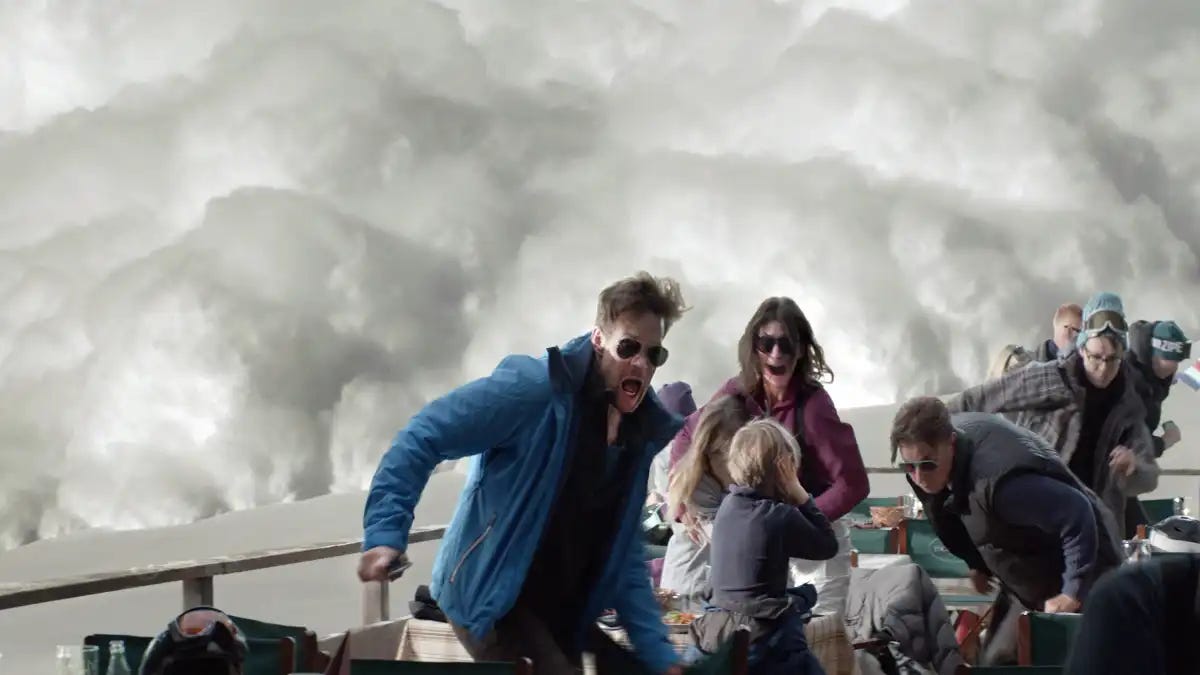
That is the brilliant premise of the 2014 Swedish film Force Majeure...a setup that gives rise to exceptional black comedy, but also to a profound and unsettling question:
How will you act when your mettle is truly tested?
After all, when a tragedy or disaster strikes, every second is critical and the consequences of one’s reaction are serious. We all like to imagine that we’ll have the “correct” response... but how can one know if it has never happened before? How can we prepare for such a situation?
And can we ever know who we are until we see how we respond?
Modern science may be quick to absolve Tomas above, pointing to the body’s deeply ingrained survival mechanisms. In moments of perceived danger, hormones such as adrenaline and cortisol surge through the bloodstream, triggering the familiar “fight, flight, or freeze” response. Heart rate increases, breathing quickens, and the brain shifts its focus away from careful deliberation toward immediate survival. In such moments, instinct can override reason and rationality.
Just as our hearts beat and our lungs breathe without conscious effort, we do not truly control many of our body’s automatic responses.
Yet that is clearly not the whole story...
After all, there are countless examples of people who have trained themselves to respond differently under pressure. From firefighters and ER doctors to police and military personnel, mastery of one’s reactions is part and parcel of the job.
Likewise, history is replete with philosophers, thinkers, and statesmen who discuss this very fact.
Perhaps the most famous example is Epictetus, the Greek Stoic philosopher who was born into slavery at Hierapolis in Phrygia, yet found fame in Rome and later Nicopolis. Known for his limp, he regularly spoke of both the need to overcome hardship and what hardship reveals about us.
For Epictetus, life was much like an athletic contest. Just as a wrestler cannot develop strength without an opponent, a person cannot develop virtue without difficulty. Challenges were not merely obstacles to be endured, but opportunities to exercise courage, self-control, and wisdom. He famously said:
“Difficulties are the things that show what men are.”
— Epictetus, Discourses 1.24.1
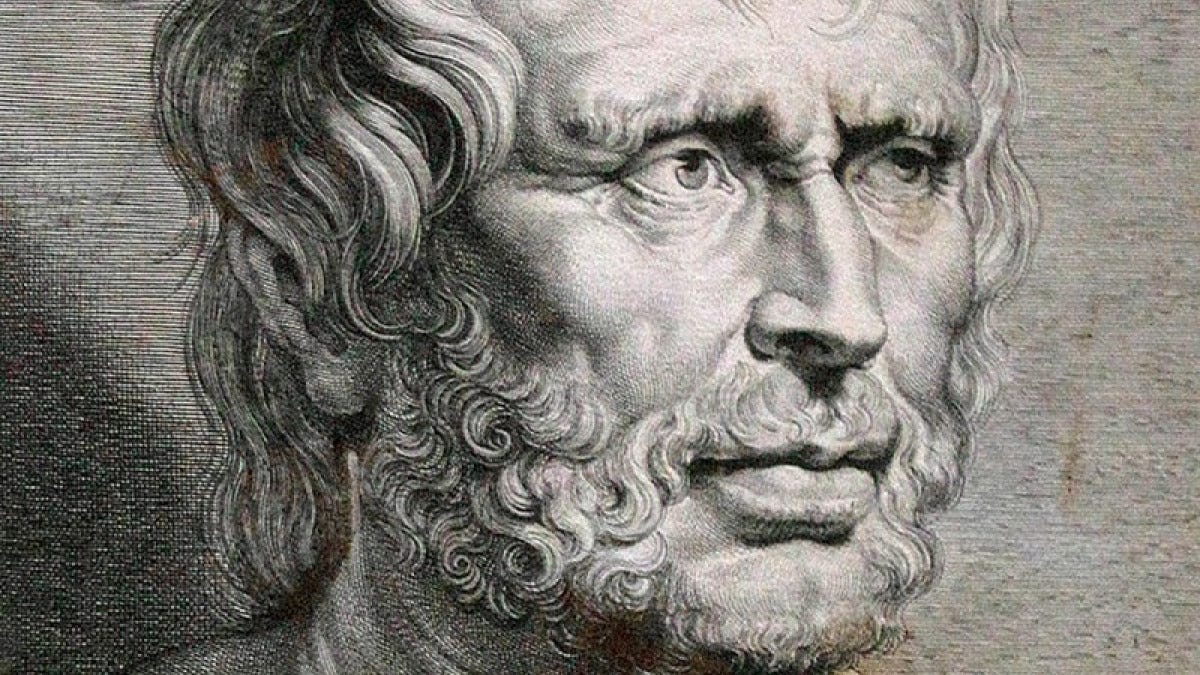
Similarly, the later Roman philosopher Seneca also wrote extensively on the topic. Born into a wealthy family in Spain and rising to become one of the most influential men in Rome, Seneca experienced dramatic reversals of fortune throughout his life.
He endured exile, navigated the deadly politics of the imperial court, and was ultimately ordered to take his own life by the emperor Nero. These experiences helped shape his conviction that adversity is not merely something to endure, but a means of self-discovery.
Without opposition, he argued, we may never learn the limits of our strength...or even know what we are truly capable of. In his words:
“I deem you unfortunate because you have never been unfortunate. You have passed through life without an antagonist; no one can ever know what you are capable of, not even you yourself.”
— De Providentia (On Providence) 4.3–4.4
The ancients understood that you can’t really know who you are until your mettle has been tested... but perhaps that is because they also had more opportunity to test that mettle.
The question becomes not merely theoretical or philosophical, but necessary. After all, for the ancient world, adversity was not a rare interruption of life, it was often an unavoidable part of it.
Theirs was a time of regular warfare, and battle wasn’t relegated solely to professionals. Philosophers like Socrates and poets like Aeschylus were also obligated to take up arms and witnessed firsthand the extremities of war.
Likewise, the impact of sudden natural disasters was much more common. Without the luxuries of satellite imaging and the science of modern meteorology, the ancients were far more vulnerable to the dangers of nature. Storms would descend with little warning, earthquakes could devastate entire cities in moments, and droughts or failed harvests could threaten entire communities. Without today’s technological safeguards, moreover, the shock of such events was often immediate, unavoidable, and deeply personal.
Really, up until a hundred years ago, life was really hard for almost everyone. War, disease, famine, and disaster were not distant possibilities, but ever-present realities. Few people could expect to pass through life without having their courage, resilience, or character tested in some profound way....
Today, however, many of us can wake up each morning without worrying that tragedy will suddenly strike. The grocery stores are stocked, the houses are sturdy, and the route to school or work is secure. For much of the developed world, the comforts and stability of modern life have insulated us from many of the dangers our ancestors faced as a matter of course.
Fortunately, the majority simply don’t have enemies at the gate or avalanches at the door. So how can we know what we’ll do if and when a true crisis comes?
And if it never comes, can we really say that we know who we are?
Should we be looking for trouble to prove ourselves?
Probably not...
After all, the Stoics did not believe we should seek out disaster or court misfortune. Life, they knew, would provide enough challenges of its own. Instead, they encouraged the deliberate practice of smaller hardships: taking on difficult responsibilities, speaking uncomfortable truths, exercising self-discipline, and willingly stepping outside one’s comfort zone.
Perhaps that is enough.
Most of us may never face an avalanche, a battlefield, or a shipwreck, (I hope!) but we are all regularly confronted by smaller tests of character. Moments of fear, temptation, loss, uncertainty, or responsibility. Sometimes it’s as simple as telling the truth when it’s hard, facing up to something, or not perpetuating a falsehood.
And perhaps it is in these quieter moments that our mettle is revealed, not all at once, but piece by piece… decision by decision.
The question, then, is not whether a great trial will come...it is whether we are paying attention to the tests already before us.
It is often said that “the sum is greater than the parts,” and certainly Classical Wisdom would not be what it is today if it were not for the growing community of members whose thoughts and insights enliven our comments section and events.
Thank you so much for your contribution and support!
Indeed, the messages from our member's each week are a great source of inspiration. Here are just a few of what your fellow Classics lovers are saying:


If you aren’t a member yet, but would like join our wonderful community, you can do so here:
In the face of disasters, cowards panic, never the brave.
How can you become brave from cowardice?
A Stoic, inspired by Seneca, would recognize the wisdom of the famous enemy, Epicurus. Due to his examination of hedonistic philosophy—no unexamined philosophy is worth believing or disbelieving—, he would think that any suffering caused by a disaster will pass (no harm is eternal), which does not exclude death: by dying, he would know that he has escaped his body (and the world) and that no suffering could await him in the realm of death (death means nothing).
PS From a short story by Ernest Hemingway, we can understand that the person we love, if we are cowards in the face of adversity, can lose their love for us.
Difficulties are the things that show what men are.”
— Epictetus, Discourses 1.24.1 How true. With no difficulties, men are still men. (Women too) A saying I have used - "When the going gets tough, the tough get going."