

When the World Collapsed: Lessons from 1177 BC
From Myth to Reality: Discover Homer’s World

Dear Classical Wisdom Reader,
Imagine one day waking up to a world gone…dark.
Suddenly there was no internet.
No wifi or signal, no electricity, and no gas.
Credit cards didn’t work and banks were permanently closed.
Modern, advanced life as we know it had ceased to exist.
What would happen next? Who would rise and who would fall?
While the ancient people in 1177 BC didn’t enjoy the exact level of technological advances that we rely upon today, they had a moment when everything they knew suddenly, irrevocably, changed forever.
Great kingdoms that had dominated for centuries, the Mycenaeans in Greece, the Hittites in Anatolia, the powers of Egypt and Mesopotamia, were shaken by a wave of destruction so vast that cities burned, trade routes vanished, and writing itself disappeared in some regions.
Earthquakes, invasions, internal revolts, famine, climate change, and the mysterious “Sea Peoples” may all have played a role. But no single explanation tells the whole story. Indeed, while there are many theories (and a multitude of configurations of said theories), to this date we still don’t know what happened exactly to the Bronze Age people…
For the Mycenaeans, this collapse meant the end of palaces, the loss of literacy, and centuries of silence. Their towering citadels, once alive with gold, diplomacy, and power, fell into ruin.
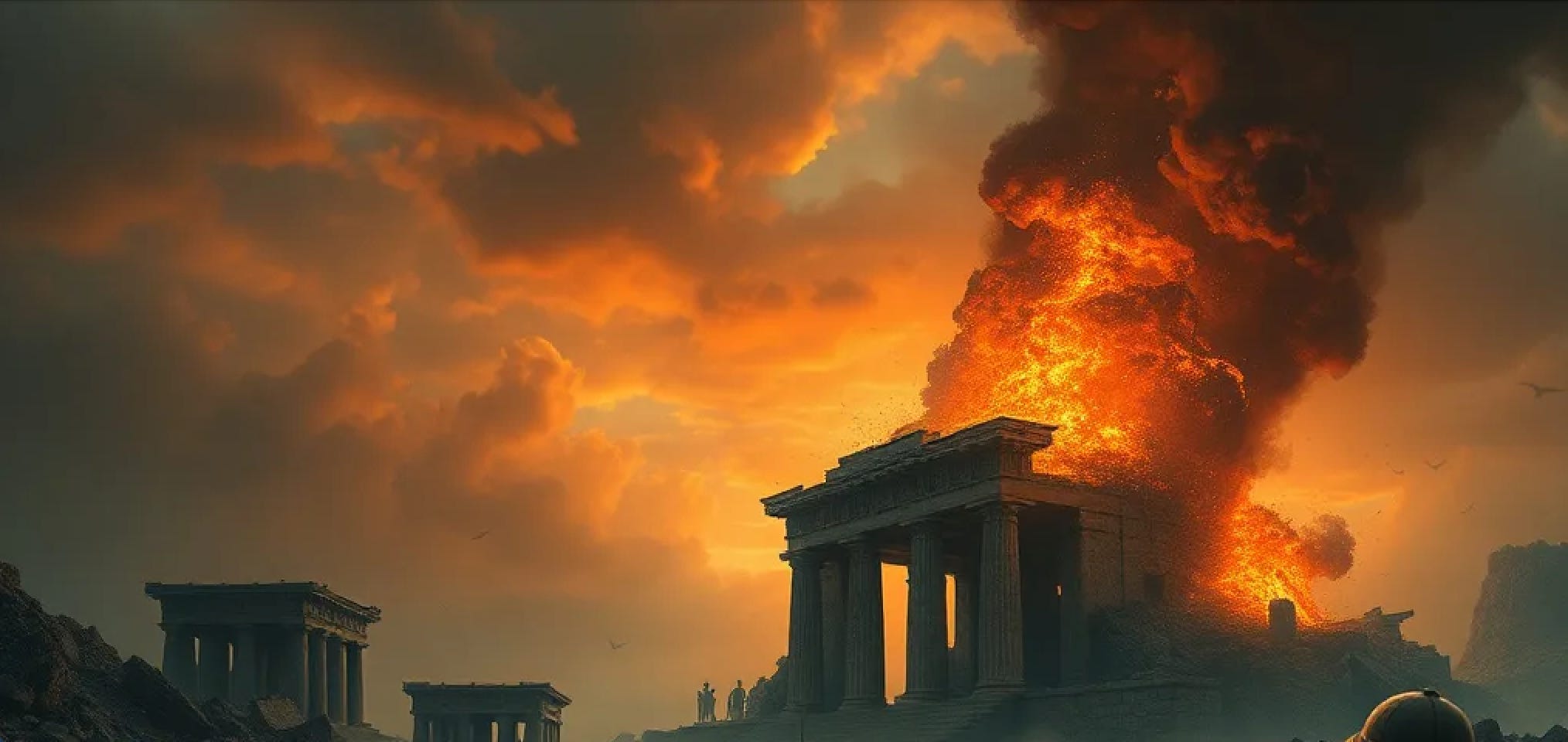
We are left with fragments: burned cities, broken tablets, abandoned roads…. and yet, from those ashes would rise the myths that still shape us today: Achilles, Odysseus, Troy.
But what truly happened? Why did so many civilizations fall together? And what can their collapse teach us about our own fragile world?
So let us look at what we know…and what we don’t know…about the fierce warriors, the ambitious engineers, and the culture that inspired Homer’s great epics, in today’s exploration of the rise, the fall, and the enduring mystery of the Mycenaeans.
Nota Bene: Before you delve into the Bronze Age, remember that this can be the year you discover these legendary sites for yourself…
You can walk where kings once ruled, where poets once dreamed, and where history itself still whispers from stone and dust.
This July, journey through Greece, the Greek Islands, and Turkey aboard the luxurious all-suite EXPLORA II, guided by award-winning Homer translator and renowned classicist Professor Emily Wilson. From the Acropolis of Athens to the mighty citadel of Mycenae, entered through its iconic Lion Gate, to the sacred theater of Epidaurus with its miraculous acoustics, you won’t just read about the ancient world…you will stand inside it.
With only a few cabins remaining, this is your moment to turn curiosity into experience and imagination into memory…before this once-in-a-lifetime voyage is fully booked:
Now… read on below and let me know what lessons you think we should take away from both their crowning achievements as well as their catastrophic collapse.
All the best,
Anya Leonard
Founder and Director
Classical Wisdom
The Rise, The Fall, And The Mystery Of The Mycenaeans
by Van Bryan
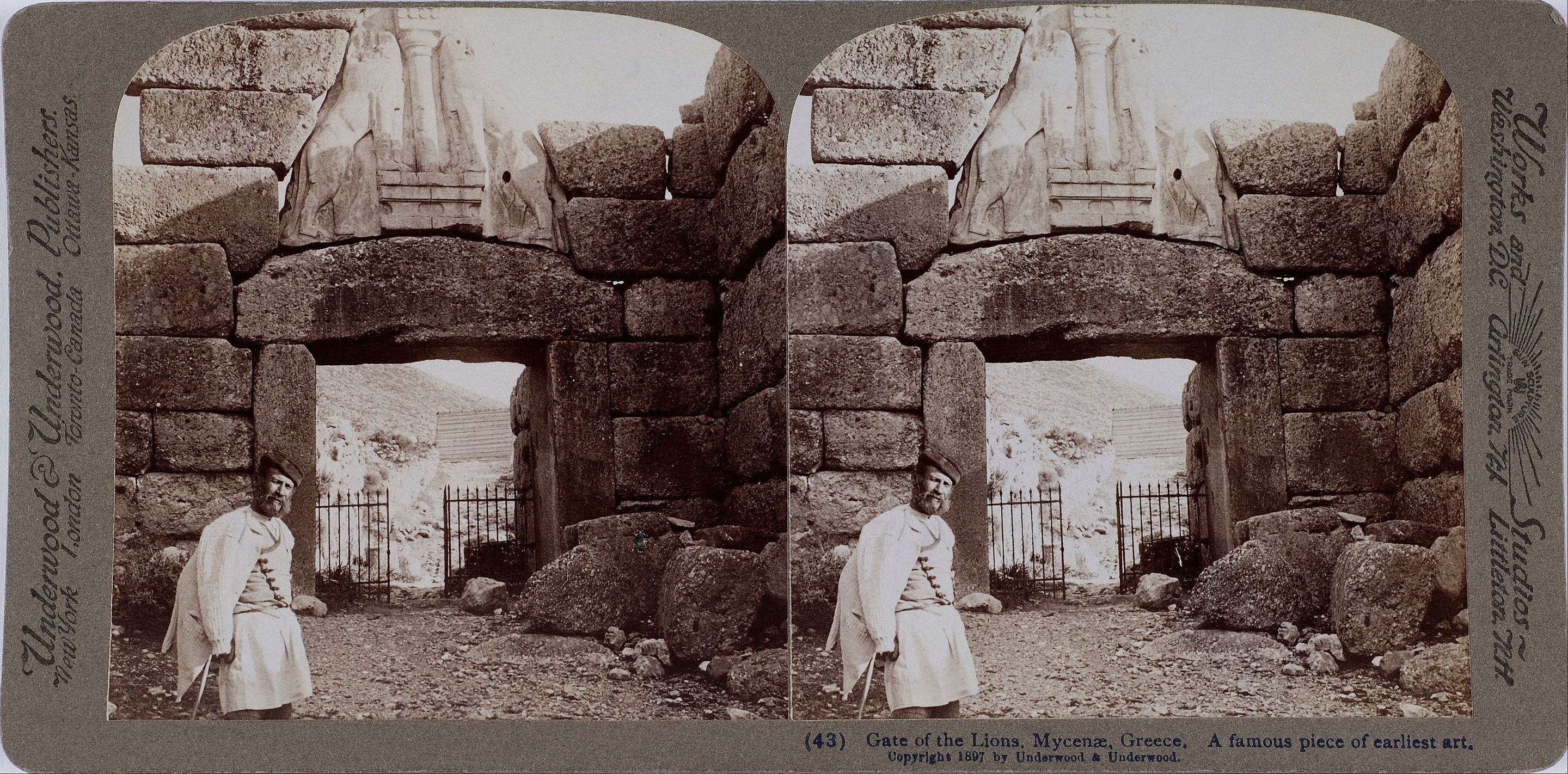
Before the time of a democratic Athens, or a conquering Alexander the Great, there existed a fledgling Greek society that remains shrouded in mystery. A time so mysterious, that it was often regarded by the Classical Greeks as a time constructed by myth more than by man.
It was a civilization that appeared from nothing, building palatial city-states and expanding trade across the known world. They conquered neighboring societies and waged wars that would become legend hundreds of years later. A society that once ruled the Late Bronze Age of Greece, they promptly vanished from history and slowly faded into legend.
They were the Mycenaeans.
The Bronze Age of ancient Greece, which lasted from about 3000 to 1200 BCE, is the historical backdrop for much of Greek mythology as well as the Homeric epics The Iliad and The Odyssey. It was a time period that fascinated the classical Greeks and prompted many stories of Trojan wars and meddling gods.
And for the longest time that is what people believed they were, stories. It wasn’t until 1872 that Heinrich Schliemann, a German businessman turned archaeologist, uncovered a Bronze Age, walled citadel that would be identified as the ancient city of Troy.

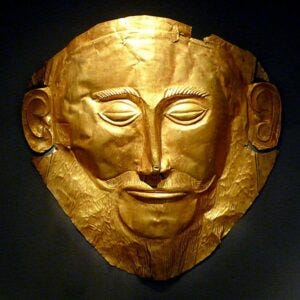
Four years later Schliemann began excavation of the fabled city of Mycenae in southern Greece which, according to legend, had been ruled by King Agamemnon, the conqueror of Troy. Lavish tombs filled with gold were quickly uncovered. Schliemann even uncovered a gold burial mask that he believed had once belonged to Agamemnon himself. It became clear that the stories of the ancients had been more than myth...
…but what is the history of the Mycenaeans?
The Mycenaean civilization sprang to life suddenly in southern and central Greece in about 1600 BCE. Developing from seemingly nothing, this civilization would grow to prominence and become one of the most dominant civilizations of the in Aegean for hundreds of years.
It is believed that the Mycenaean civilization owes much of its growth to the neighboring, Minoan civilization on the island of Crete. Trade relations between Crete and mainland Greece began around 2000 BCE and transformed an infantile collection of tribes into a flourishing Bronze Age civilization.
Along with goods for trade, the Minoans seemingly transported their entire societal structure to the fledgling Mycenaeans. The Mycenaeans accepted gladly and adopted much of Minoan culture; including their writing system, their city-state model, as well as their architecture.
It was in this way that the Mycenaeans took the dramatic steps from clustered tribes to advanced society. The similarities between the Minoans and the Mycenaeans were so striking that the early archaeologist, Sir Arthur Evans, concluded that the palaces of mainland Greece had to have been conquered and occupied by Cretan kings. This idea was largely accepted for several decades.
It wasn’t until the early 1950’s that Michael Ventris, a talented British linguist, decoded several tablets found at the palace complex of Pylos on the south-western mainland of Greece. He discovered that the writing, although using Minoan style, was actually written in Greek.
This meant that it was not the Minoans that invaded the Mycenaeans…It was main land Greece that invaded the island nation of Crete.
This explained why almost every Minoan palace was burned to the ground around 1490. Knossos, the legendary palace of King Minos, is one of the few remaining structures that was spared by the Mycenaean invaders.
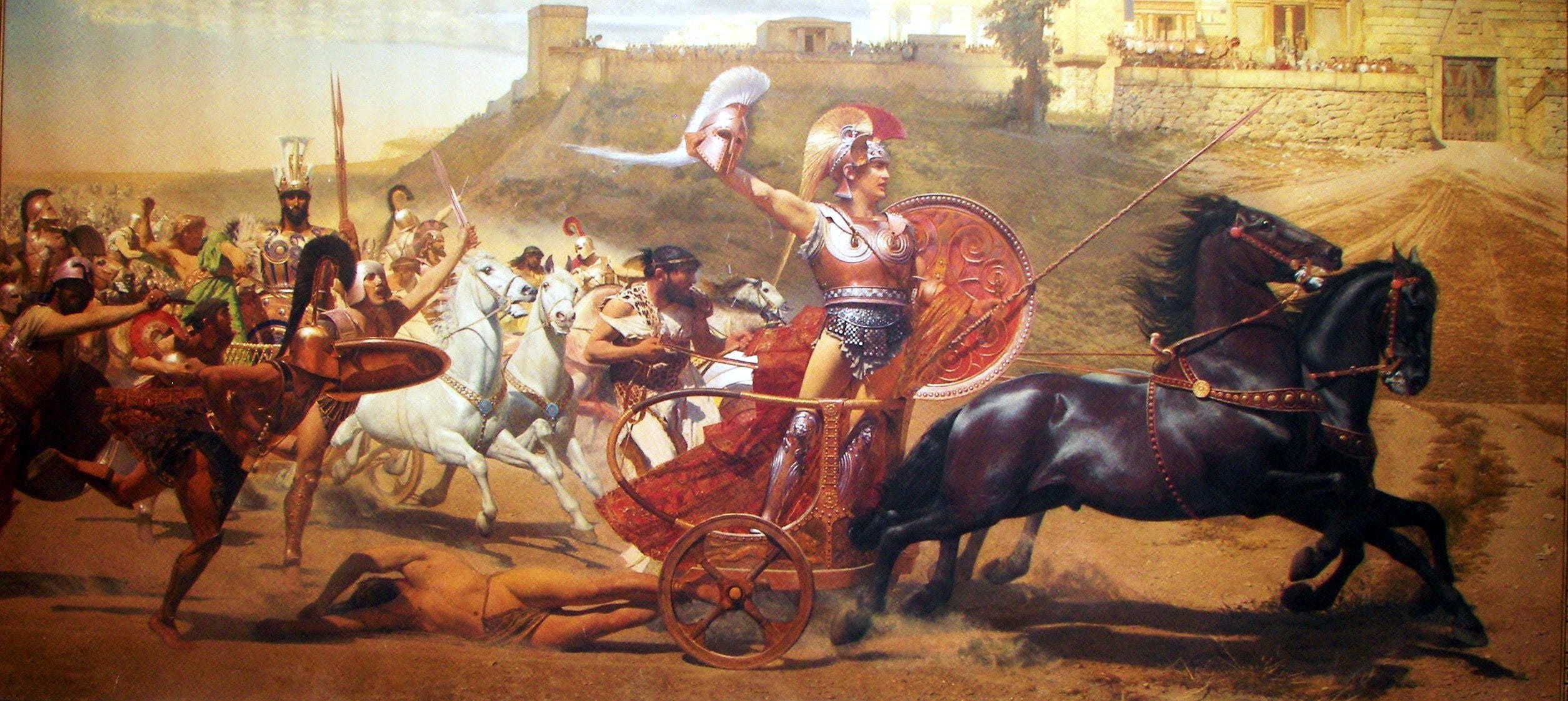
During the height of the Mycenaean reign, palaces extended throughout southern and central Greece. Trade was established in all directions including modern day Italy, Turkey and Egypt. From bronze weapons and armor found in tombs, as well as from frescos and vase paintings, we know that the Mycenaeans were capable of conducting warfare on a large scale.
The invention of the chariot around 1600 BCE, allowed for brutal charges against enemy lines. Similar to stories told in The Iliad, it is believed that military leaders would have fought alongside infantry during the numerous military engagements.
The Mycenaean civilization reached a peak in 1300 BCE and would most likely have been one of the dominant empires in the Aegean region. It is strange then, that only 100 years later, around 1200 BCE, the civilization began to disappear. The Mycenaean palaces, still functioning and filled with treasure, were abandoned. Villages and towns were burned to the ground and the once content civilians were scattered across Greece.
By the end of the 12th century, the palace system that had constituted the power of the Mycenaean civilization, had vanished.
The Greeks were not alone in their suffering. Around 1200, much of the eastern Mediterranean region was overwhelmed with turmoil. Civilizations in Italy, Anatolia and Syria were slowly destroyed by this new menace that had consumed the land. The kingdom of Egypt was one of the few civilizations that managed to repel these mysterious invaders. Egypt was attacked numerous times in the early 12th century, yet managed to maintain control over their empire.
Ancient Egyptian texts describe the attackers as “men from the northern lands” and “people of the countries of the sea”.
Interestingly enough; at this same time the ancient city of Troy fell to invaders and was burned around 1250 BCE. Homer would then seem to suggest that it was the Mycenaeans who were the invaders who tried, and failed, to conquer Egypt. The Greek civilization would have been damaged by a costly war and become easy prey for marauding bands of warriors from the north and west of Greece.
Still others believe that the Mycenaean civilization self destructed, in a manner of speaking. Wars between palace-states, slave revolts, or inappropriate agricultural practices could have lead to a weakened Mycenaean empire which would then be vulnerable to other attackers.
We may never know what truly killed the Mycenaean civilization so abruptly and with such finality. A civilization that rose to prominence in 1600 BCE, they would remain intact for only 400 years. Their sudden disappearance would plunge Greece into a ‘dark’ age for hundreds of years.
When civilization did begin to reform with the coming of the Archaic and then Classical periods of Greece, it would be so different from the Mycenaeans that the Greeks, when they looked back on their past, would imagine it as something of a dream world where gods and men mingled together.
Classical Wisdom Members:
Classical Wisdom Members, this article comes from our Classical Wisdom Litterae Magazine which is entirely dedicated to the Mycenaeans.
Also included are their origins in Homer’s myths, the Hunt for the Key to Linear B, Mycenaean Pottery and Beehive Tombs, and the Devaluation of Ariadne…From Powerful Goddess to Lovesick Maiden.
Please enjoy the full Classical Wisdom Litterae issue, dedicated to these Bronze Age Peoples:
For those who are interested in finding out what happened AFTER the Bronze Age collapse, we have a great podcast with Professor Eric Cline on the topic that was extremely interesting: https://classicalwisdom.substack.com/p/after-1177-bc
It is likely that widedpread drought affecting the near-east and eastern Mediterranean lands about 1200BC was a factor in people displacement, migration and ‘invasions’.