

Where Comedy Meets Philosophy
Head in The Clouds?

Dear Classical Wisdom Reader,
It’s as true now as it was two and a half thousand years ago…
We all need a laugh now and then!
So today we’re looking at The Clouds by Aristophanes, a play that’s funny and entertaining, but also a crucial snapshot of the history of philosophy.
Featuring Socrates as a character (and written while he was still alive) it also prominently features the school of Greek philosophers knows as the Sophists.
Yet its not a flattering picture!
All the same, it’s eye-opening to see how these two worlds of ancient comedy and Greek philosophy can have their history so entwined.
So read on below to discover how funny the world of philosophy can be…
All the best,
Sean Kelly
Managing Editor
Classical Wisdom
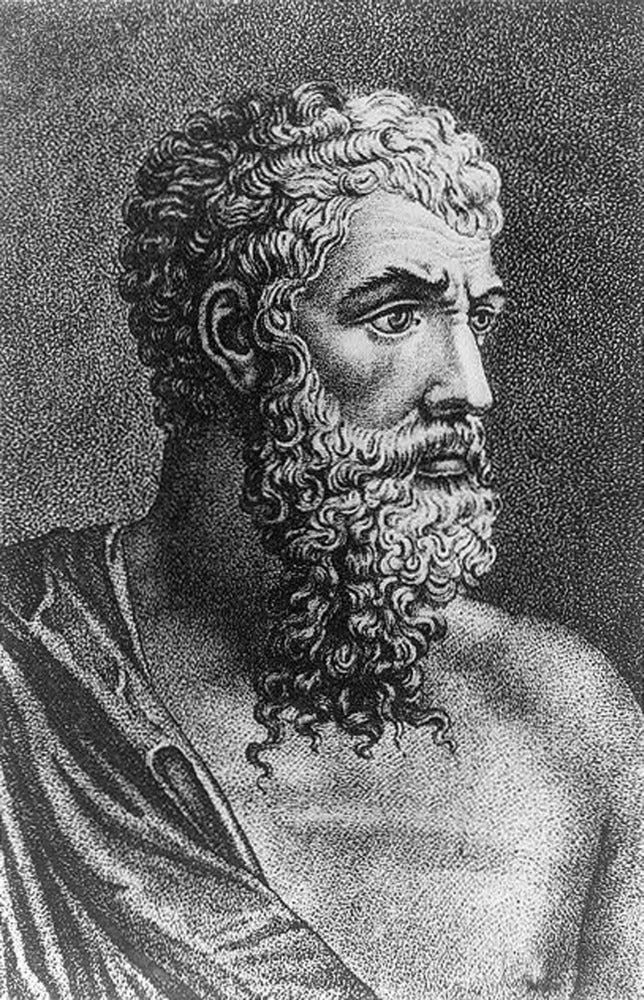
Aristophanes: Comedy and Philosophy
by Ed Whelan
He’s known as the ‘Father of Comedy.’
Regarded as the greatest comedic dramatist of the ancient world, his work is surprisingly interlinked with the history of philosophy. He even appears as a character in Plato’s Symposium, where he is shown as a genial figure who liked a good time. He is Aristophanes (c. 450-c. 388 BC), known for masterpieces such as the comic drama The Clouds. This was a satire on the morals, education, and philosophy of Athens in its Golden Age. In particular, it attacks the work of the Sophists and Socrates. Despite its levity, however, the play has a serious message about the dangers of speculative reasoning and challenging existing social norms.
But who was the man himself, really?
Aristophanes was an Athenian citizen, and his family was quite affluent. We have few biographical sources for his life, yet we do know that he wrote approximately forty plays in verse. Only eleven of these have survived, such as Peace and Lysistrata. They are written in Attic Greek, and are the only surviving examples of what is known as ‘Old Comedy.’ He produced his plays at Dionysia and Lenasia, dramatic competitions held in honor of the god Dionysus, and won the competitions several times. His comedies are very episodic, and the humor is often crude yet satiric in nature. Aristophanes’ creative genius, however, is evident in his sparkling dialogue and his brilliant parodies.
Like many satirists, he was conservative in his outlook, and he attacked the dramatic changes that he saw in Athens in the fifth century BC. Aristophanes wrote works that called for peace with Sparta during the Peloponnesian War (431-404 BC), and he attacked philosophers such as the Sophists, whom he saw as subverting the social system with their ideas. Aristophanes’ work was rediscovered during the Renaissance, and has been enormously influential on western comedy drama and satire.
The Clouds
The Clouds was composed by Aristophanes for the Festival Dionysia (423 BC) but was not well-received. However, the work circulated in manuscript form and became influential. The plot concerns a spendthrift son, Pheidippides, being urged to go back to school at the insistence of his father. He wants his son to go to the ‘Thinkery’, a school where he can learn how to outwit his creditors. He refuses, so in desperation his father Strepsiades joins the school instead. The head of the school is Socrates, one of the founders of western philosophy.
The philosopher instructs Strepsiades that the gods do not exist, and exposes him to other radical ideas for the time. Socrates is shown as teaching the man how to make the weaker argument the stronger argument, and how to twist words to win a case, irrespective of its merits. This is known as sophistry, and was named after the philosophers and teachers, the Sophists. They taught a form of relativism, and how to use rhetoric to win arguments.
Strepsiades eventually persuades his son to enrol in the Thinkery. The Chorus in the play warns Strepsiades against this, but it is ignored. The father believes that in the Thinkery his son will gain skills in sophistry, and that this can help him to outwit his creditors and avoid bankruptcy.
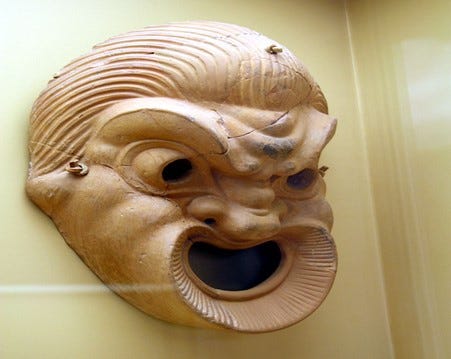
When two of Pheidippides’ creditors come looking for him, Strepsiades uses the sophistry taught to him by Socrates to baffle them. He claims that because the gods do not exist, he does not have to repay any debts. The Chorus again warns Strepsiades that sophistry and its relativism will one day leads to disaster. Suddenly a shocked Strepsiades appears, and he is being beaten by his son after the two had an argument over literature. The Chorus sings that this familial violence is a result of sophistry and the teachings of Socrates. Strepsiades comes to agree, and he and his slave attack and burn down the Thinkery.
Themes of The Clouds
Aristophanes’ play is a satire of the education provided by the Sophists and the teachings of Socrates. He shows their ideas as dangerous, as they do not respect the truth or the gods. This is demonstrated in the way that Strepsiades cheats his sons’ creditors, and when Pheidippides beats his father. These events would have shocked the conservative Athenian audience, as respect for contracts and one’s elders were seen as essential for society. Aristophanes was not just mocking the Sophists and thinkers such as Socrates, he was showing them as dangerous, and a threat to order and society.
In The Clouds, Aristophanes’ portrays Socrates as a Sophist, yet he was not one. It is in fact the opposite of how he was portrayed by his student Plato, who has Socrates arguing against the relativism and sophistry of thinkers such as Protagoras. Despite this, The Clouds is an example of how influential satire and comedy can be. In Plato’s Apology, it is claimed that Aristophanes’ work had contributed to the trial of Socrates and his death; Aristophanes’ portrayal of the philosopher turned many Athenians against him, and this led ultimately to his execution.
Despite this, Aristophanes’ plays is still funny, and its ideas are still relevant, even after 2500 years. His writing gives us another perspective on ancient Athens and is an important source on its history and culture. The influence of The Clouds on comic writing has been immense, and unlike others works, has always remained popular and critically acclaimed.
So then Socratic humor is that he spoke symbolically or allegorically and maintained an unassuming demeanor. Aristophanes took this seriously and made Socrates out to be everyone’s fool. Whether Aristophanes inspired the crowd or the crowd inspired Aristophanes, isn’t the problem, as Xenophon suggests. Comedy keeps the conversation going. Philosophy asks questions.
Another work you should consider covering is "Philosophies for Sale" by the satirist Lucian. It's in the Loeb Classical Library and a bit harsh, but definitely worth a read.