

Rome’s Darkest Dynasty: The Plot of the Three Daggers
The Sisters Who Dared Challenge Caligula


Dear Classical Wisdom Member,
What happens when power, family, and rumor collide?
Ancient Rome was no stranger to scandal, but few stories are as tantalizing -or as troubling- as that of Caligula and his three sisters…
When the emperor Gaius, better known as Caligula or “Little Boots,” ascended the throne, he promised a new golden age. He showered the people with gifts, threw lavish games, and even brought home the remains of his long-lost family.
For a brief moment, Rome believed it had a savior.
But within a few short years, all of that changed... Rumors of incest, betrayal, and a deadly plot involving Caligula’s own sisters would send shockwaves through the empire. Were Julia Agrippina, Julia Drusilla, and Julia Livilla truly conspiring with his enemies… or was it all a product of the emperor’s paranoia?
In this special members-only feature piece, we dive into the drama of the Plot of the Three Daggers to uncover how three women found themselves at the very center of Rome’s most notorious reign….and why their story still resonates today.
All the best,
Anya Leonard
Founder and Director
Classical Wisdom
Caligula’s Sisters and the Plot of the Three Daggers
By Mary Naples
At long last, Tiberius was dead. After twenty-three long years marked by fear, mistrust, and paranoia, the grim and utterly unlikable Emperor Tiberius met his end at the advanced age of 78—a milestone that many of his victims would have envied. He was so ‘beloved’ that Romans debated how best to desecrate his body, with some suggesting he should be hurled down the Gemonian steps (a fate reserved for common criminals) or pitched into the river. "Tiberius in the Tiberem" became a widely chanted slogan.
Within two days of Tiberius's passing, the Senate officially confirmed his great-nephew, Gaius Julius Caesar Germanicus, as emperor. He is known to us as Caligula, or "Little Boots," a nickname earned in childhood because of the miniature soldier's boots (caligae) that his mother made him wear while accompanying his father on military campaigns. The Romans, however, always referred to him simply as Emperor Gaius.
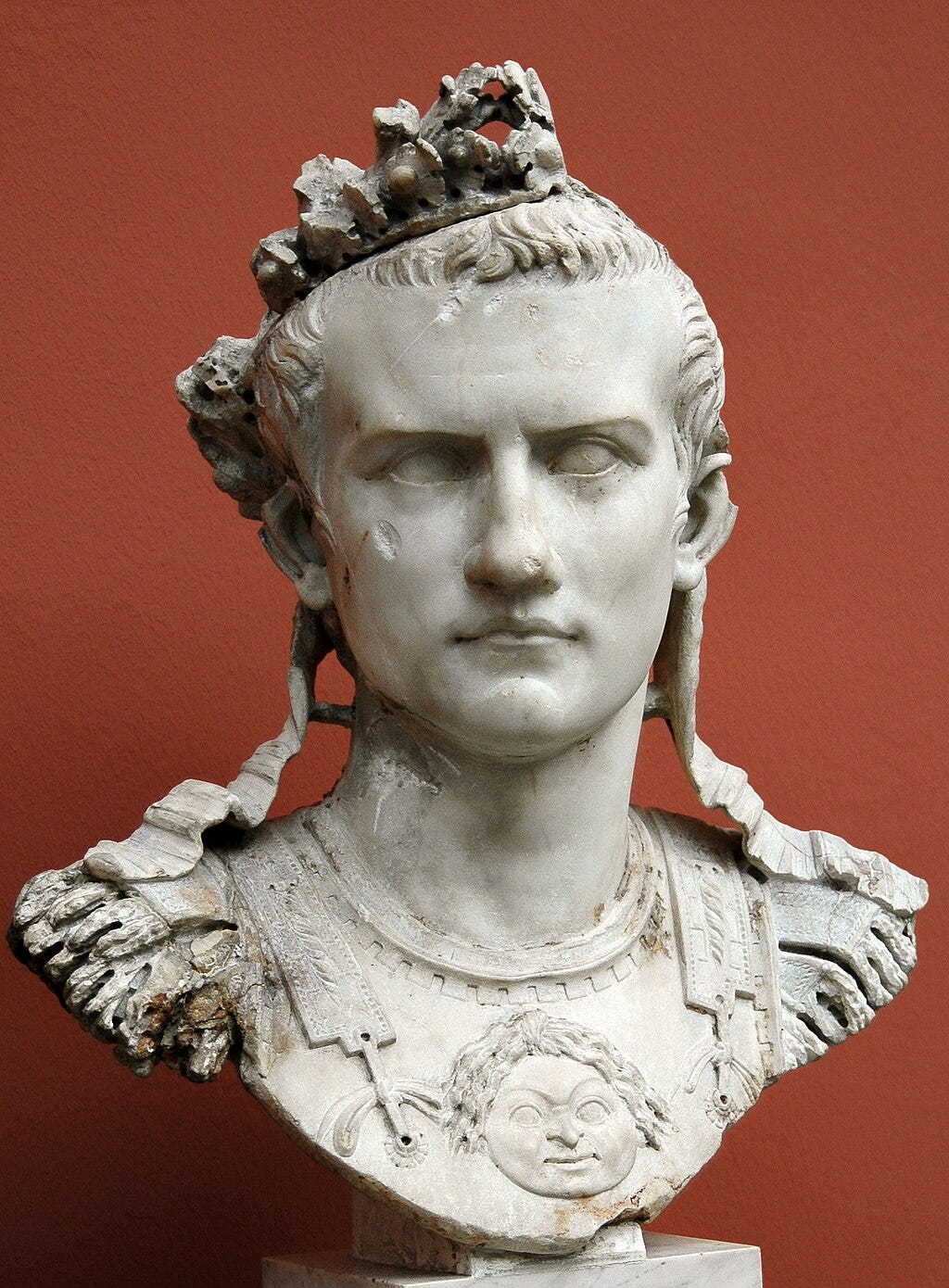
Suetonius reports that the celebrations welcoming Caligula's rule were widespread throughout the empire and lasted for a full three months, featuring games, lavish public spectacles, and the sacrifices of more than 160,000 animals.
The crowds were not only celebrating Tiberius's death…

 | A guest post by
|