


How Can We Handle Anxiety?
How Can We Handle Anxiety?
Practicing the Stoic Skill: Premeditatio Malorum

Dear Classical Wisdom Reader,
Sometimes the wisdom of the ancient world is a little more... abstract. Ideas and theories to contemplate and elevate ourselves out of the deary routines of life. What better way to spend your evening reading than to submerse yourself in the sublime?
Other times, however, the words from those long since passed have blatant practicable use in our here and now.
I’m a fan of both, but sometimes an ancient insight or well worded aphorism can hit just at the right time...
I think today’s article has not just one of those, but many... as worrying, anxiety, stress is simply part and parcel of our modern lives. With expectations high and limited time, it’s impossible to not get caught up in an oddly worded rodent race.
So what can we do to battle this constantly recurring concern?
First, you can enjoy today’s article on the stoic skill: Premeditatio Malorum...
And second, you can register for our next event “The Philosophy of Anxiety”.
From Greek tragedies and Buddhism to actual practices from ancient doctors like Galen, there are a myriad of important lessons about anxiety that can be gleaned from the past. With the help of both ancient philosophy and history, how can we see anxiety as a source not only of suffering, but also of insight?
Join us on March 6th at Noon EST to rethink anxiety.
Check out our fantastic panel of experts here: https://anxiety-philosophy.eventbrite.ie

Now, for some wise words from Seneca, Marcus Aurelius and Epictetus to start your week (and year) off right...
All the best,
Anya Leonard
Founder and Director
Classical Wisdom
P.S. While today’s article features the practical, this week’s Members magazine delves into the ideal and the theory of the forms. Fortify your mind with the philosophy of Plato and build a solid foundation in the classics.
Members: Watch your inbox this Wednesday... And if you aren’t a member yet, join our growing community before then to receive your Classical Wisdom Litterae magazine, dedicated to Plato:
A Stoic Skill: Premeditatio Malorum
by Andrew Rattray
What makes you nervous?
What worries you?
We all have something that ties our guts up in knots when we think about having to do it, don’t we? Life is full of these situations, where we find ourselves concerned about what the future holds. Especially now, with the ever-negative deluge of the 24 hours news cycle, it’s hard to shore ourselves up against the uncertainties of what’s to come.
So, what can we do? Well, as ever, we can turn to the wisdom of the ancients to guide us. The Stoic practice of Premeditatio Malorum, or premeditating evil, was developed for precisely these paralyzing worries. It’s a tool to help us bolster our defenses against the specter of an uncertain future, and remind ourselves that we have the ability to overcome any challenges we might face.
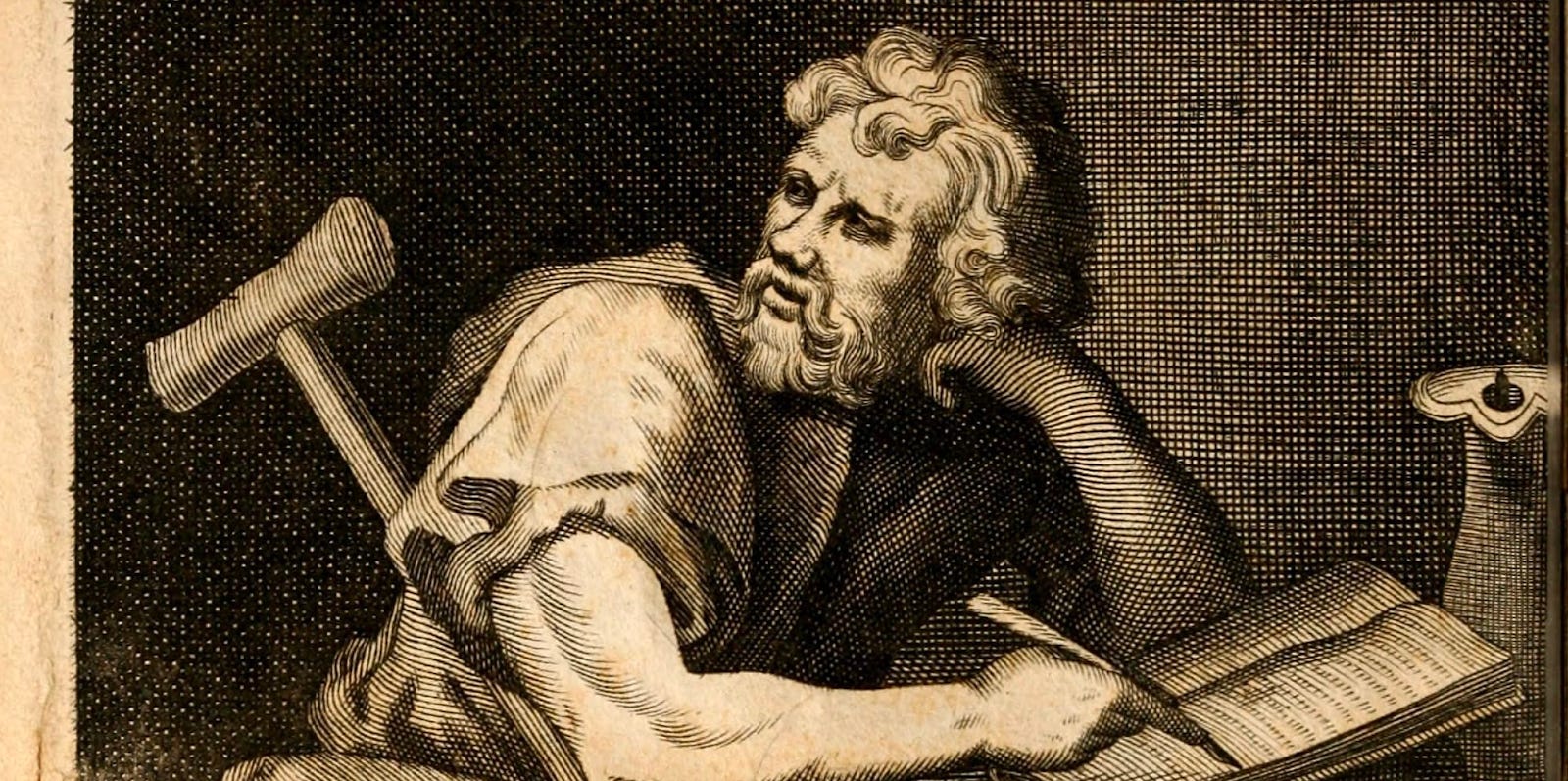
Premeditatio Malorum simply refers to the visualization of negative outcomes. It’s the mental preparation for the worst that might happen; a way to build mental fortitude in the face of uncertainty. To give you an idea of the technique in practice, let us turn to Epictetus, one of the most prominent Stoic philosophers of all time. When considering how to visualize negative outcomes, he states in his work, the Enchiridion:
“When you set about any action, remind yourself of what nature the action is. If you are going to bathe, represent to yourself the incidents usual in the bath—some persons pouring out, others pushing in, others scolding, others pilfering. And thus you will more safely go about this action if you say to yourself, “I will now go to bathe and keep my own will in harmony with nature.” And so with regard to every other action.”
That’s all well and good, I hear you say, but how exactly does this help us?
Well, Epictetus says it himself: by mentally preparing ourselves, we are able to maintain our will in a virtuous manner. In other words, we are able to deal with these difficult situations, and keep our cool in the moment.
Great, but how does this process help alleviate the anxiety we face about these looming situations? Isn’t this just a form of pre-emptive worrying? Well, not really.
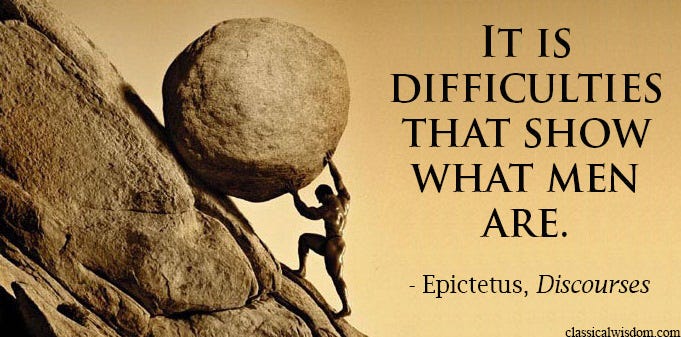
Strength through Wisdom
Seneca, the Roman statesman and philosopher, summarized the ideas behind the practice in one of his many letters, writing:
“If an evil has been pondered beforehand, the blow is gentle when it comes. To the fool, however, and to him who trusts in fortune, each event as it arrives, “comes in a new and sudden form,” and a large part of evil, to the inexperienced, consists in its novelty. This is proved by the fact that men endure with greater courage, when they have once become accustomed to them, the things which they had at first regarded as hardships. Hence, the wise man accustoms himself to coming trouble, lightening by long reflection the evils which others lighten by long endurance.”
What Seneca is saying is that being caught off-guard by negative situations is always worse. By exercising negative visualization of eventualities ahead of time, we allow ourselves to be ready if they happen, and remove the sting of surprise. That readiness also removes some of the fear and anxiety we face about the future. We no longer need to worry about what we will do, for example, if we find people jostling and splashing us in the swimming pool as Epictetus suggests.
This allows us to cultivate resilience. We can trust in ourselves that we have the fortitude and virtue to weather whatever the future has in store for us. Building this trust in ourselves in turn helps to soothe our worries.
Marcus Aurelius, the Roman Emperor and another prominent Stoic, captured this idea beautifully in his Meditations writing:
“Never let the future disturb you. You will meet it, if you have to, with the same weapons of reason which today arm you against the present.”
The strength of endurance is already within us, for we have already endured many events that were once uncertain futures, and so the future that now looms is nothing more than another step on a path we are already well traveled in.

Memento Mori… But In A Good Way
Now, let me take a moment to address the often-leveled criticism of Stoic practitioners; that they’re absolutely miserable all the time. I can see how someone might arrive at that conclusion, particularly when faced with the practice of negative visualization, but it’s not as desolately terrible as it seems.
In truth, the technique allows for happiness to grow and flourish within us precisely because it helps to soothe our fear of the unknown. Seneca reminds us:
‘What is quite unlooked for is more crushing in its effect, and unexpectedness adds to the weight of a disaster. This is a reason for ensuring that nothing ever takes us by surprise.‘
So, you see, the practice isn’t to drive ourselves into depression, quite the opposite!
Let me give you another example, the Stoic Memento Mori, translated as ‘remember your mortality’, or more morbidly, ‘remember you must die’. Again, without the proper context it seems like dwelling on our eventual death isn’t a particularly good strategy for being happy – but you’d be wrong! Let me explain...
Once again, Seneca has wisdom to share on this subject, writing in one of his letters to his friend Lucilius:
“Let us prepare our minds as if we’d come to the very end of life. Let us postpone nothing. Let us balance life’s books each day…The one who puts the finishing touches on their life each day is never short of time.”
You see, the Stoics view the time granted to us as a gift and by remembering that it will ultimately come to an end we can invigorate ourselves to steal the day, to do the things we’ve been putting off, to try for that new job, to ask that person on a date, because why not? It’s all going to end eventually, we might as well enjoy the ride while it lasts and not put off those things we wish to accomplish!
This is the purpose of the Memento Mori, and negative visualization more generally: to push ourselves toward a more positive outlook.
Negative visualization in this way is a juxtaposition, a way to achieve peace and happiness by reminding ourselves of the very worst things that can happen. By thinking on how things can go wrong for us, we remove the sting of surprise if they do. In knowing things might go wrong, we can prepare ourselves mentally for the eventuality and so remove the anxiety and fear associated with the unknown.
The most important thing to remember, though, is that things almost never go as badly as we might imagine they will. By building up an expectation for the worst to happen, we allow ourselves the pleasure of life being easier than we had expected. After all, as Seneca once wrote, “We often suffer more in imagination than in reality.”
One of the best ways to control externally induced anxiety is to remain ignorant, a philosophy that says “the easiest way not to worry about things you can’t do anything about is not to know about them”. It’s a very old practice. I first ran into it as a young man when a middle aged woman I worked with told me she no longer watched the news or read the newspaper, adding that it produced too much anxiety in her life for no benefit to her or anyone else. I later ran across others who had done the same. This during a time which was much less anxiety producing than our present day. This approach is more heavily practiced in America today, I believe. One benefit of it is it does limit the effect of PsyOps and propaganda for those who ignore the msm. I witnessed that during the vaccine push. Those who avoided the nightly news and newspapers like the NYTs were more likely to say No to the vaccine. We are no longer “informed” by corporate media. If you want to remain informed you must switch to alternative media, including the burgeoning citizen journalism.
While I agree Stoicism is a useful practice in coping with anxiety, I'm skeptical that it's mental training alone can allow us to mitigate it. Other mental, physical, and emotional practices are likely required in conjunction with Stoicism or other forms of mindfulness training to alleviate these negative feelings.
I came across this insight while backpacking the Appalachian Trail and noted that I rarely felt any anxiety during the four months spent in the outdoors despite being prone to it prior to that adventure. I've spent a lot of time researching and reflecting on the meaning of adventure in society.
There is a range of physiological and cultural reasons behind all this but suffice it to say that there are several aspects of life that I believe are important to cultivate that aide in reducing things like fear, anxiety, and depression and also allow us to live a more optimal life.
My working hypothesis toward what I'd call a "theory of life satisfaction" includes things like 1) having a sense of autonomy; 2) building sustainable relationships; 3) having a physical routine of exercise; 4) having an active and healthy sex life; 5) having an intellectual/creative outlet; 6) consistent travel or adventure; 7) having a healthy diet; 8) laughing often.