

Happy Birthday Rome!
The Violent Birth of Civilization

Dear Classical Wisdom Reader,
Happy Birthday Rome! Yes, dear reader, today is officially the day that the eternal city turns 2778 years young. She wears it so well!
Of course determining the actual ‘date’ of such a nebulous beginning, an event steeped in mythology and legend, is very tricky. Fortunately Imperial propaganda was able to get to the heart of it with a formula concocted by the Roman polymath and scholar, the man described by Petrarch as the “third great light of Rome”, Marcus Terentius Varro.
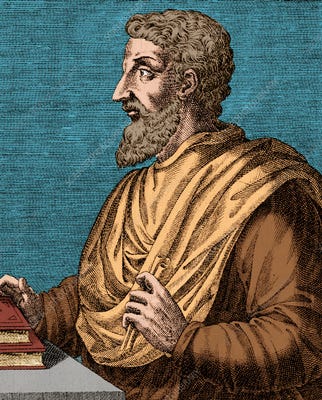
With the aid of clever (though not historically accurate) calculations, Varro's chronology gained prominence and became the standard for calculating the "Ab Urbe Condita" (AUC) or "from the founding of the city" era.
And so it was determined that on April 21, 753 BC that murderous twin, Romulus founded the city of Rome.
To us it might seem a little strange to celebrate such a bloody beginning... but to the Romans apparently it made a lot of sense.
So today we will commemorate the great civilization of Rome by remembering her humble (and dare I say horrific) start, a fratricidal foundation, below.
All the best,
Anya Leonard
Founder and Director
Classical Wisdom
P.S. For those of you in Rome (or with plans to ever celebrate her birthday there), make sure to check out the Pantheon! Originally commissioned and built by Marcus Agrippa, a Roman statesman and general, during the reign of Emperor Augustus, the building is uniquely created to have a surprise on the 21st...
Classical Wisdom Members, watch this space! We’ll be sending you a special Pantheon email later today in honor of Rome.
If you aren’t a member, make sure to join our community and bring the classics into your everyday life:
Romulus and Remus: The Violent Birth of a Civilization
The ancient Romans revered tradition so deeply that they elevated myth to the status of history. At the heart of this reverence lay a brutal and enduring legend: the tale of Romulus and Remus. Despite the fratricide at its core, the myth was not only accepted, it was celebrated. Romulus, the slayer of his own brother, became the founding father of Rome, and through this paradox, the Romans found a mirror for their values: strength over sentiment, destiny over kinship, and the supremacy of divine will over human frailty.
The Origins of a Myth
There is no single, definitive version of the Romulus and Remus legend. Like all myths, it evolved, adapting to the needs of the people who told it. Some scholars suggest it may have roots in an early wolf cult, which eventually transformed into a foundational narrative for a burgeoning city-state. Archaeological excavations have unearthed a shrine to the twins in the heart of ancient Rome, underscoring their early veneration. Festivals such as the Lupercalia, a raucous rite celebrating fertility and purification, were dedicated to them, though even in antiquity, many Romans no longer understood their true origins.
A Story Written by the Gods
According to the most widely accepted version of the tale, Romulus and Remus were the sons of Mars, the god of war, and Rhea Silvia, a vestal virgin and daughter of the deposed king of Alba Longa. Her uncle, Amulius, having usurped the throne, forced her into the celibate priesthood to prevent any legitimate male heirs from rising against him. Yet fate, ever subversive, intervened.
When Rhea Silvia gave birth to twin boys, Amulius was seized by fear. A prophecy had warned that her children would one day dethrone him. In a desperate attempt to outmaneuver fate, he ordered the infants to be abandoned, left to die by exposure, a grim practice not uncommon in the ancient world. But the gods had other plans.
The basket carrying the infants floated down the Tiber River until it came to rest beneath a fig tree at the foot of the Palatine Hill. There, a she-wolf—symbol of wild instinct and nurturing power—discovered the crying infants and suckled them. A shepherd later found and raised them as his own. As the boys grew, so did their strength, their courage, and their awareness of their royal lineage.
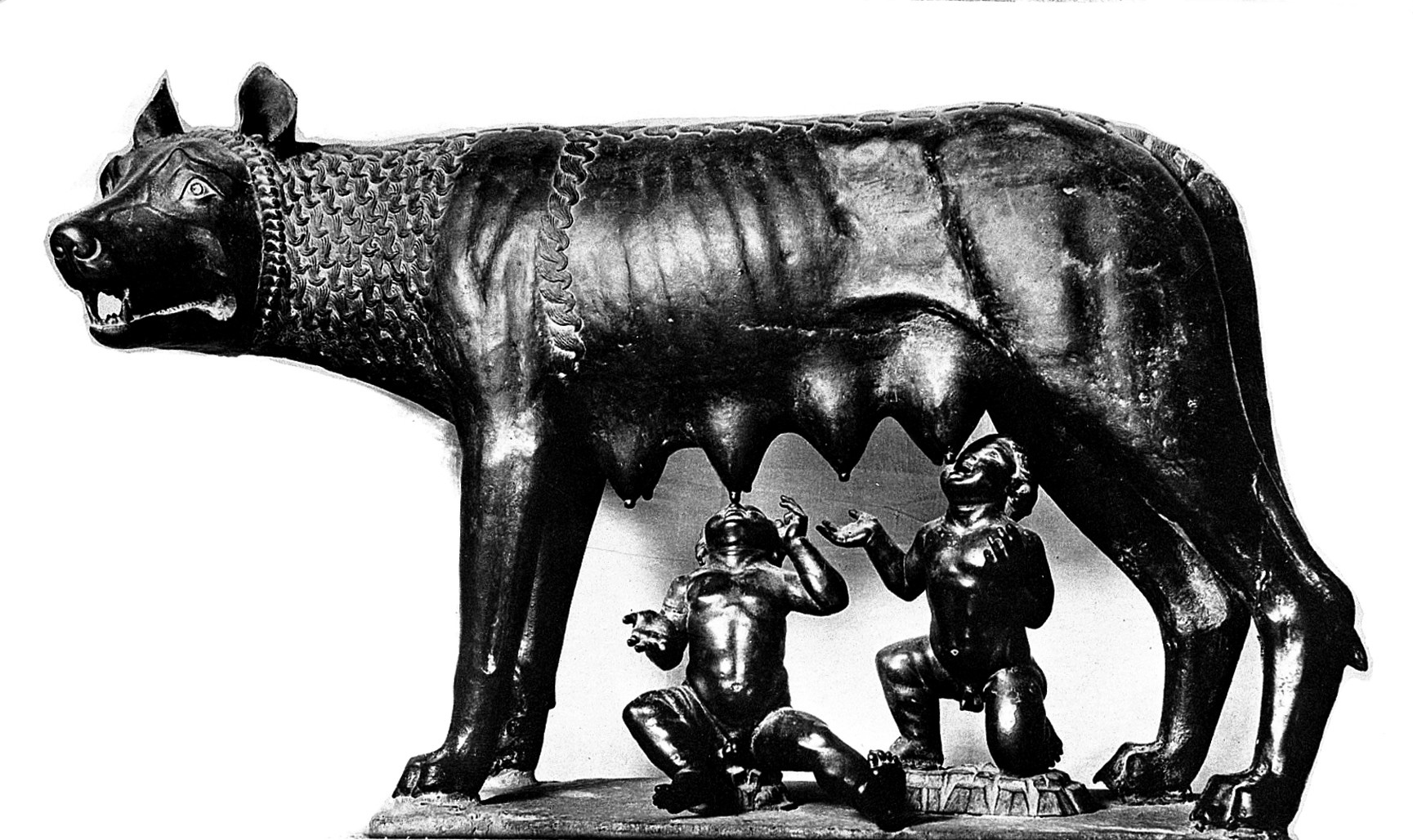
In time, Romulus and Remus returned to Alba Longa, overthrew the tyrant Amulius, and restored their grandfather to the throne. But they would not stay. Their destiny lay elsewhere; on the banks of the Tiber, where fate, divinity, and blood would converge to give birth to a city like no other.
Fratricide and Foundation
The brothers’ return to the site of their miraculous rescue marked the beginning of a new dispute. Where should their new city rise? Romulus favored the Palatine Hill, while Remus preferred the Aventine. Turning to augury—the Etruscan art of interpreting divine will through the flight of birds—they sought the gods' guidance. Remus claimed to see six vultures; Romulus, twelve. The disagreement escalated.
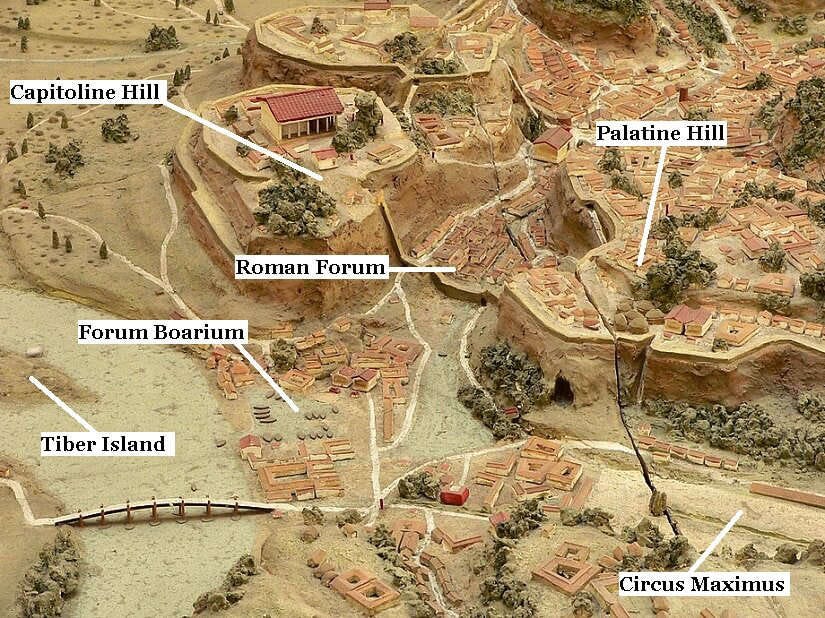
As Romulus began constructing the city walls on the Palatine, Remus mocked the effort and leapt over the growing fortifications, belittling his brother’s ambitions. This act of defiance proved fatal. In one version, a follower of Romulus struck Remus down with a spade. In another, the gods themselves intervened. Regardless of the cause, the result was the same: Remus lay dead, and Rome was born, baptized in fraternal blood.
Livy, the eminent Roman historian, records that Romulus mourned his brother and gave him an honorable burial. Yet the message was unmistakable: unity demanded sacrifice, and the city’s foundation was inseparable from violence and divine will.
Romulus, King and Legend
With Remus gone, Romulus emerged as the unchallenged ruler of the new settlement. Under his leadership, the city expanded rapidly. He fortified it, gave it a name—his own—and established many of the institutions that would define Roman political life for centuries. The Senate, the division of citizens into patricians and plebeians, the first laws of Rome; all were attributed to Romulus.
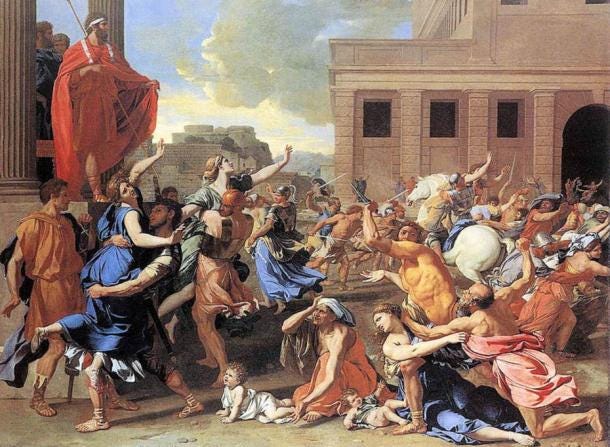
His reign was marked by war, diplomacy, and legend. He is said to have conquered the Sabines and Alba Longa, forging the early Roman identity through both marriage and conquest. When he vanished, either taken up into the heavens by the gods or murdered by resentful senators and buried in the Forum, Romulus passed from king to myth, joining the divine lineage that Romans believed guided their fate.
A Myth With Meaning
The tale of Romulus and Remus is more than a charming origin story; it is a myth that articulates the Roman worldview. It justifies hierarchy, violence, and divine right. The twins' struggle underscores a key Roman value: that order and greatness often require painful choices. The myth sanctified Rome's institutions, portraying them as born not of mere politics but of destiny.
The fratricide, rather than being a moral stain, was seen as a tragic necessity, a reflection of the harsh realities of power. Omens, fate, and the will of the gods were not abstract ideas; they were guiding forces that demanded respect, even obedience. The myth became central to Roman civic religion and art, depicted on coins, in frescoes, and celebrated in public ceremonies.
Conclusion: The Echo of a Founding
The myth of Romulus and Remus endured because it resonated deeply with the Roman psyche. It shaped not only how Romans viewed their past, but how they understood their place in the world, favored by the gods, forged by struggle, destined for greatness. In this foundational tale, the Romans saw not just the story of their city’s birth, but a blueprint for empire.
Even today, the story of the wolf-raised twins continues to fascinate. It is a reminder that every civilization, no matter how grand, begins with a story…and sometimes, that story is written in blood.
the date April 21 is the date in astrolgy where Venus and Mars, the two founding gods of Rome, intersect.!!!
Always & forever a fitting date for the beginning of European Civilization. While European peoples, as a distinct pan-ethnicity is prehistorical, of course, 753 BCE is truly the beginning of “civilization”—a word that is terribly misplaced & overused historically around the world.
ROMA ÆTERNA